
Traverse Released Mugshot Sources
The official Traverse County current-custody PDF labels its image field “Front Mugshot.” That photo belongs to a booking record. It is not a released-person gallery, and the PDF contains no historical release date, release type, or destination field. Once a person is removed, the stable PDF link may show a later roster instead. A missing image therefore says little about the prior booking.
Minnesota law treats a booking photograph as public law-enforcement data under Minnesota Statutes §13.82, subdivision 26. An agency may temporarily withhold it if release would adversely affect an active investigation. Public classification does not erase privacy concerns, prove that all republication is proper, or override the sheriff roster page’s warning about using its documents and images without express permission.
The official booking-photograph statute supplies the public-data rule and its temporary active-investigation exception.
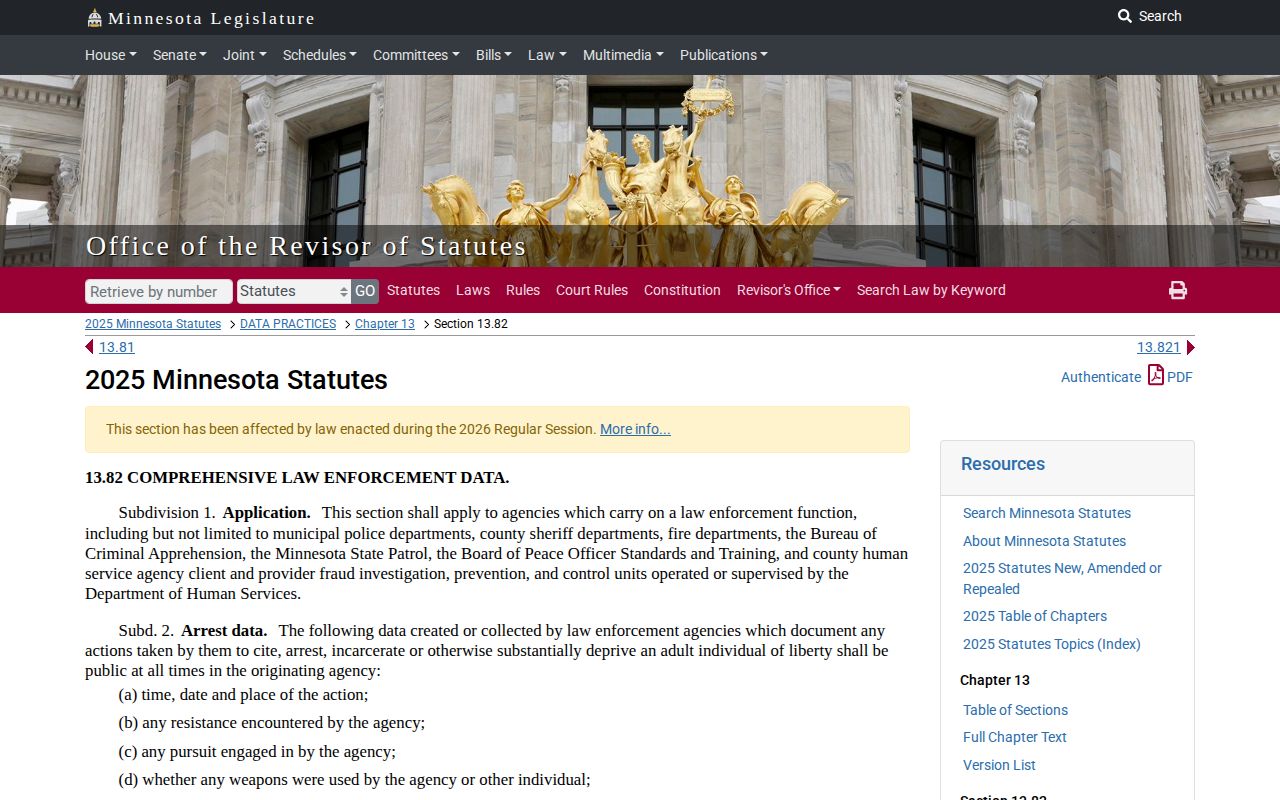
The statute explains access classification; it does not turn the current roster into a historical gallery.
| Channel | Has a photo? | How to use it |
|---|---|---|
| Traverse current roster | Yes, for people currently listed | Check the “Front Mugshot” field; do not treat it as a release archive |
| Sheriff data request | Often, if the historical image is public | Identify the person and approximate booking, then request the booking photo |
| MNDOC Public Viewer or record | May include a corrections image | Use only for a state-corrections commitment under continuing DOC jurisdiction |
| Sheriff app | None verified | Do not substitute an unofficial app |
| News report | Sometimes | Treat it as story context, not an official release record |
| Third-party archive | May retain a stale image | Do not rely on it for identity, dates, status, or reuse rights |
Traverse Roster Mugshot Limits
The Traverse County inmate-roster page links to a regenerated, date-stamped PDF. Its exact fields include Front Mugshot, name, age, Booking Date, Held For, Conditional Bail Amount, and Sentence End Date. The page is a present-custody source. It does not publish a released-photo archive or a 24-hour, 48-hour, or 72-hour release gallery.
Use the print date to judge the roster’s freshness. Do not compare saved copies and claim a release based on disappearance. The person might have bonded out, completed a sentence, transferred to another county, entered MNDOC custody, or moved to a federal authority. Photo discovery and release confirmation are separate tasks. The Traverse County release-record path explains how to verify the custody change through VINE, the jail, the court file, and the permanent jail record.
Because no official recent-release gallery exists, the Traverse County 24-Hour Release List explains the VINE, phone, court, and permanent-record fallback for a recent custody change.
The current roster’s photo shows a booking. It does not establish conviction, community release, or the person’s current location.
Note: Traverse County publishes no official sheriff app or released-photo archive, so a historical request is the strongest former-booking path.
Request Traverse Booking Photos
Send a written Minnesota Government Data Practices Act request to the Traverse County Sheriff’s Office. A clear request should seek the historical image tied to a named booking, not a screenshot from today’s roster. It can also ask for the booking sheet and permanent jail entry so the image is matched to the right person and event.
- Give the full name, date of birth, known aliases, and an approximate booking date.
- Ask for the front booking photograph and the related booking sheet or permanent jail record.
- State whether inspection, copies, or both are requested. Inspection of public data is generally free.
- Ask for an estimate before copies are made. Format and volume affect the charge.
- Request segregable public portions and the statute used for any withholding or redaction.
Traverse County Sheriff’s Office
203 Seventh Street North
PO Box 826
Wheaton, MN 56296
Phone: 320-422-7800
Fax: 320-563-8700
The current county schedule has a $20 media category that may apply to photo delivery, but the actual format and volume matter. County policy may require half of an estimate above $50 before work begins. No sheriff-specific turnaround was published, so do not assume that a historical photo will arrive the same day.
A useful sentence is: “Please provide the public front booking photograph for [name and date of birth], approximately booked [date], with the related booking sheet and permanent jail-record entry.” Add a request for the statutory basis of any denial. If an active investigation is cited, ask whether the temporary reason can be reviewed later.
The sheriff’s cost worksheet allows for labor, copying, mailing, printing, computer work, terminal use, microfilm, and other expenses. Those categories do not mean each one will apply. Inspection of public data is generally free, and the county should be asked to explain the format and estimated cost before producing a paid copy. A requester can narrow a broad request to one booking date and one front image.
Pairing the photo with the release entry also prevents a common error. Two people may share a name, and one person may have several bookings. The booking number, approximate intake date, date of birth, and court file help identify the right image. If the supplied record does not match, contact the records custodian promptly and describe the mismatch without posting the image elsewhere.
Note: Ask for an estimate because photo format, page count, and delivery method can change the cost of a Traverse County request.
Traverse DOC Offender Photos
A Traverse arrest can later lead to commitment to the Minnesota Commissioner of Corrections. In that state-prison context, the MNDOC Public Viewer may show an offender image and details such as current status, MNDOC Offender ID, anticipated release date, expiration date, offense information, and court file numbers. That is a corrections image, not necessarily the photo made during the Traverse County booking.
Coverage has limits. The viewer is useful for people still incarcerated or “Under Supervision.” Fully discharged people may no longer appear. For the historical DOC record, use the MNDOC offender-record request and identify the MNDOC ID, aliases, birth date, sentence, and court number. DOC Records can be reached at 651-361-7330 or CO-Records.DOC@state.mn.us.
County and state images should not be merged. A person can have more than one booking photo across agencies and dates. Match each image to its custodian, booking or commitment, and court file before treating it as the sought record.
An MNDOC image also cannot establish what Traverse County recorded at booking. A county photo documents intake at the sheriff’s facility. A DOC image relates to state correctional custody. If both are needed for a legal or records matter, request each from the agency that created it and keep the source label attached. The fact that one image remains public does not show that the other remains available.
Traverse Mugshots Beyond Agencies
A local news report may show an arrest image or an agency-supplied photo when the case is newsworthy. Research found no systematic Traverse release-news or mugshot feed. A story is not proof of a release, and an old photo can remain online long after custody changes. Check the named agency and date in the report, then return to the official record.
Commercial and third-party collections may also retain old images. They are not authoritative sources for identity, present custody, release dates, addresses, or image rights. Official sources should be used instead of commercial mugshot publishers. Minnesota research also found no enacted anti-pay-to-remove statute, so a failed 2014 proposal must not be described as current law. Avoid services that promise a legal result they do not control.
When an unofficial image is wrong or tied to the wrong person, preserve the URL and a copy of the claimed source. First seek the accurate government record. Then use the publisher’s correction process with that evidence. An official correction does not automatically update every copy elsewhere.
A request for correction should state the exact error. Examples include a mismatched name, wrong booking date, incorrect agency label, or a false claim that the person remains in custody. Supply the official record that resolves the point. Keep the request factual and retain proof of delivery. Image removal and factual correction are different requests, and an unofficial publisher may apply different rules to each.
Traverse Mugshots and Expungement
Expungement seals a record from public view. It does not destroy the event or every copy that existed before the order. A full Minnesota order may reach court and many executive-agency records, while a partial order may seal the court file but leave other records accessible. The exact order controls.
Waiting periods under §609A.02 run from successful completion or discharge and vary by case result and offense level. The researched general periods include one year for diversion or a stay of adjudication, two years for a petty misdemeanor or misdemeanor, three years for a gross misdemeanor, and four years or other stated periods for eligible felony categories. Registration-required convictions under §243.166 cannot be expunged.
The current Minnesota expungement eligibility statute is the controlling source for the waiting periods and eligible case categories.
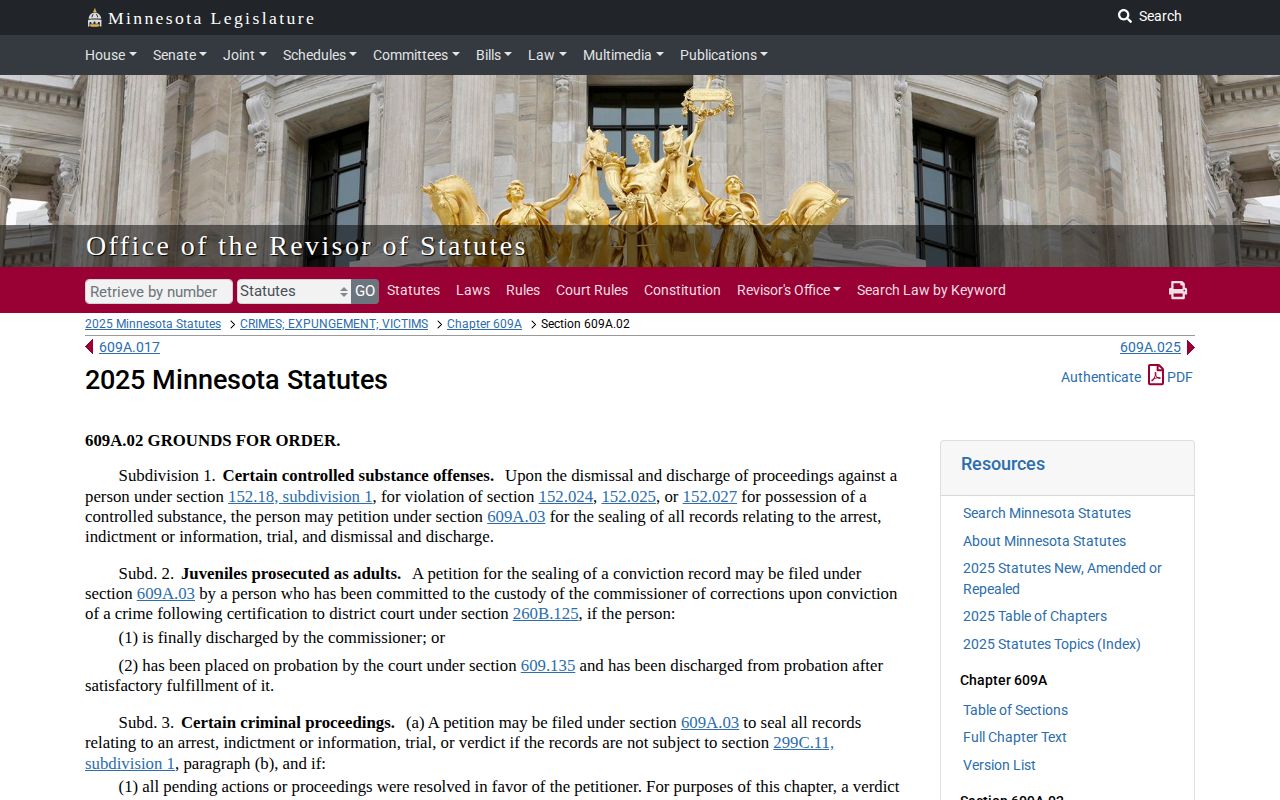
Eligibility is only the first issue; a signed order determines the actual scope of sealing.
The Minnesota courts’ criminal expungement guidance describes the filing process and notes that a standard petition can take several months. Traverse County lies within the service area identified for Legal Services of Northwest Minnesota, and the Minnesota Attorney General’s expungement resources point to legal-help options. A sealed search result should never be restated as proof that no booking occurred.
The Minnesota Judicial Branch expungement resource outlines the court process for seeking a sealing order.
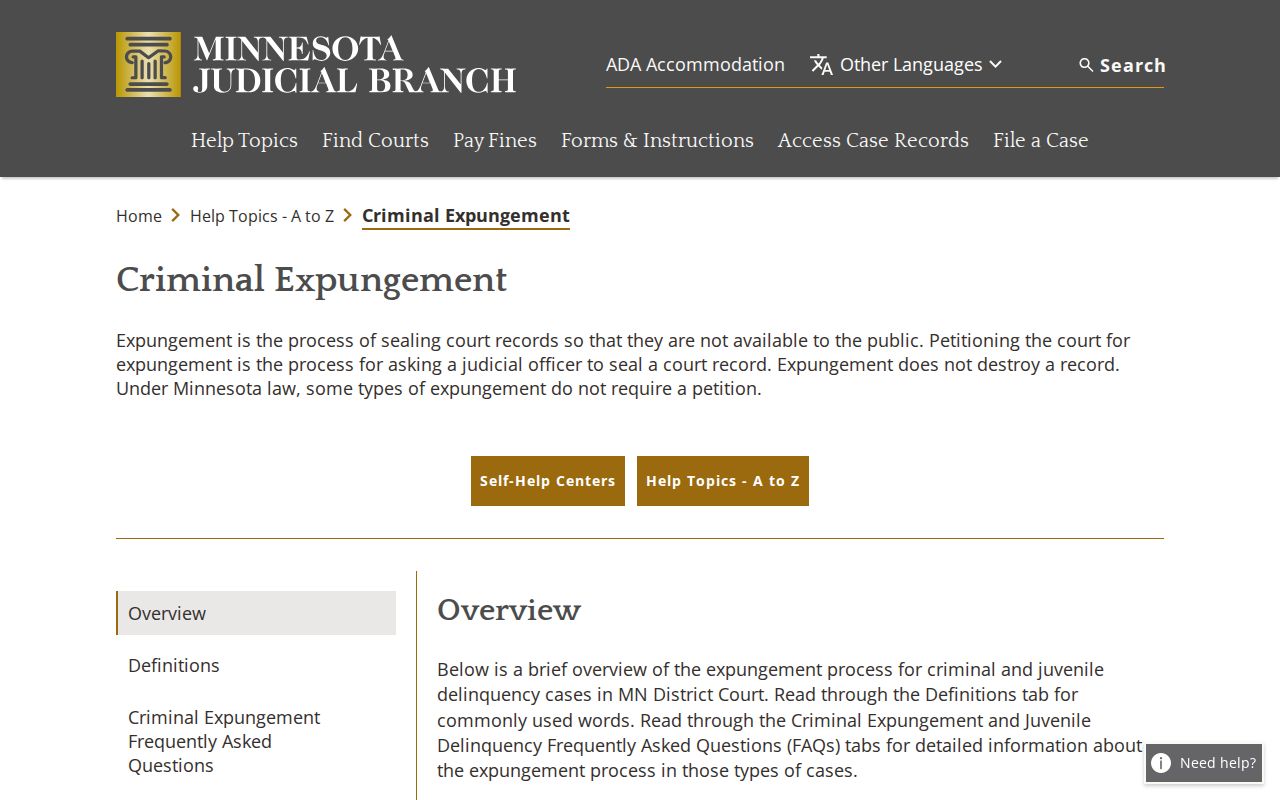
An order’s text determines which government records are sealed and what follow-up an agency can take.
The Minnesota Attorney General’s expungement page provides another official route to legal resources and service-area information.
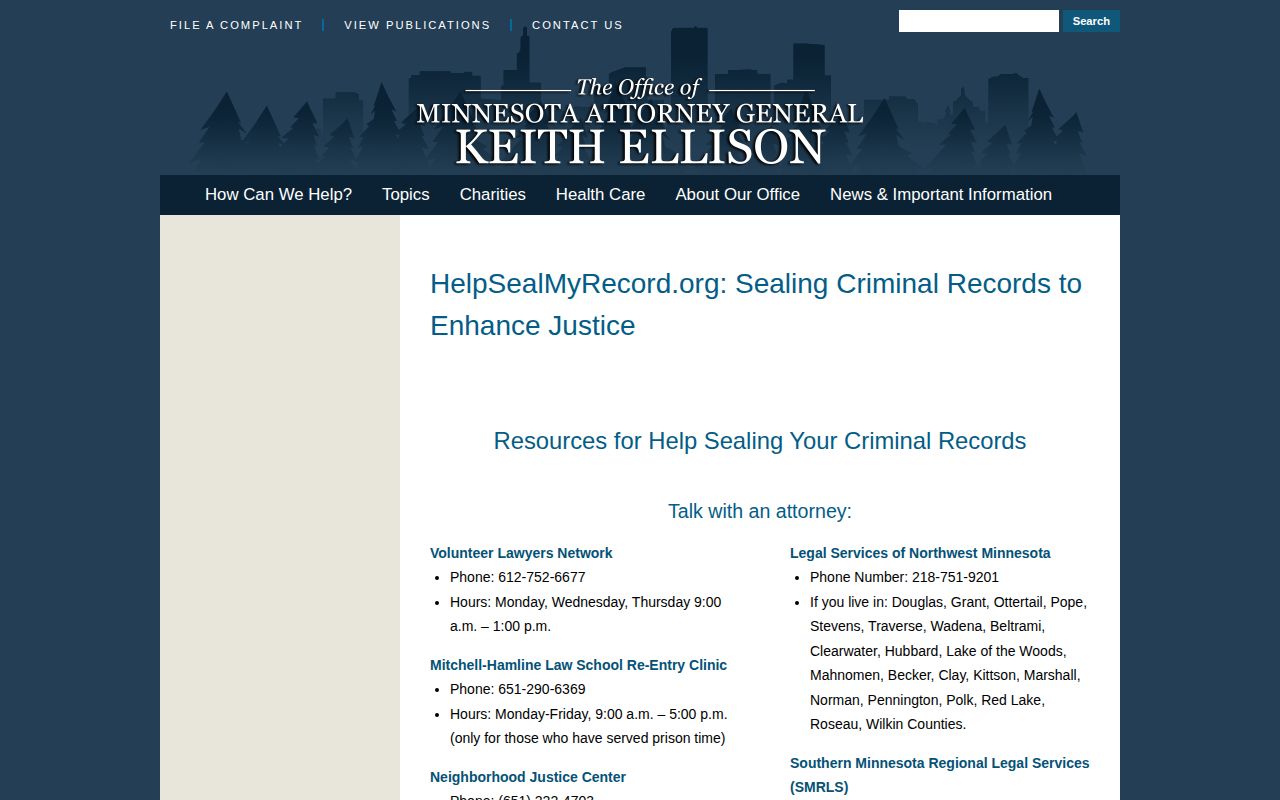
Those resources can help a person understand the process, but they do not guarantee that a specific image or record will be sealed.
Traverse County Released Inmates is not a consumer reporting agency under the FCRA. Booking-photo information cannot be used for credit, employment, tenant, insurance, or any other FCRA-covered purpose.
To address an official image after an expungement order, contact the agency that holds it and provide the court file number and order. Ask which records were sealed and whether the public image should be restricted. Do not assume a court order reaches a private copy without further action.
Note: Expungement relief depends on the signed order, not merely on eligibility or the filing of a petition.
Read Traverse Photo Records Carefully
A booking image is one field in a larger record. Read it with the person’s name, birth date, booking date, holding agency, and court file. The “Held For” field matters in Traverse County because the jail accepts people for outside agencies. A photo in the Traverse roster does not mean Traverse was the final releasing authority.
Next, separate future and past events. Conditional bail describes a possible release path. Sentence End Date is prospective while a person is listed. Neither proves a completed release. The permanent jail record required by §641.05 is the better source for when and by what authority the person was liberated, while the court Register of Actions can show the legal disposition.
Finally, use neutral terms. “Booking photo” describes the record without implying guilt. Identify the date and source when discussing it. If the person was transferred, say so. If only the roster changed, state that the name is no longer shown and seek confirmation before calling the event a release.