
Traverse Parole and Probation Paths
Probation and supervised release are not interchangeable. Probation is a court-ordered period in the community, often imposed instead of jail or after a short local sentence. The court file sets its terms. Minnesota usually calls the community portion of a modern state-prison sentence supervised release. MNDOC remains the responsible authority during that part of the sentence. Traditional parole hearings apply only to narrower sentence groups, so a person leaving prison should not be described as “on parole” without a record that uses that term.
Traverse County adds a local split. Western Probation Services handles specified adult gross-misdemeanor, misdemeanor, and juvenile work for five counties in the Eighth Judicial District. Felony prison release is generally tracked through the Minnesota Department of Corrections. The sentence, not the person’s home address, identifies the right route.
| Record type | Who orders it | Best public check |
|---|---|---|
| Local probation | District court | Court case and Western Probation public-data contact |
| MNDOC supervised release | State sentence framework | MNDOC Public Viewer status and DOC record |
| Limited parole or board release | Applicable sentence law and board action | Board materials and MNDOC record |
| Final discharge | End of supervision or jurisdiction | DOC record, court file, or agency confirmation |
- Supervised release
- The community part of a Minnesota prison sentence while MNDOC jurisdiction continues.
- Probation
- Court-ordered community supervision under stated conditions.
- Discharge
- The formal end of supervision or correctional jurisdiction.
- Absconder
- A supervised person alleged to have stopped reporting or evaded supervision.
Verify Traverse Post-Release Supervision
No public database lists every Minnesota probation client. MNDOC’s Statewide Supervision System is restricted to authorized criminal-justice users. Public verification therefore requires a short chain that follows the sentence. Use the full name, birth date, known case number, and MNDOC Offender ID when available. A matching name by itself is not enough.
- Search the MNDOC Public Viewer. “Under Supervision” confirms release from prison with DOC jurisdiction still active.
- Open the Traverse County case through Minnesota Court Records Online. Read the sentence, probation term, later revocation orders, and discharge entries.
- For a local lower-level or juvenile matter, contact Western Probation and request only the public facts tied to the matched case.
- If the public viewer no longer returns a fully discharged person, request the historical offender record from MNDOC Records.
- Use warrant or fugitive sources only as later status clues. Confirm custody separately with the issuing or holding agency.
A court sentence can prove that supervision was ordered. It does not, by itself, prove the person’s present compliance, location, or custody status.
The broader Traverse County released-inmate search and record path can help distinguish a local jail departure from a transfer into state or federal custody. That distinction comes first.
Note: A released person may remain under supervision even after disappearing from a jail roster or leaving a prison facility.
Traverse Probation Office Records
Western Probation is the local contact layer, but its county page offers no public client or absconder search. It serves Big Stone, Grant, Stevens, Traverse, and Wilkin Counties. Its stated work includes adult gross-misdemeanor and misdemeanor matters plus juvenile cases connected to the Eighth Judicial District. Ask the office to identify the public status fields for one matched person and case. Do not seek confidential progress reports or recommendations.
Western Probation Services
1010 Broadway
PO Box 856
Wheaton, MN 56296
Phone: 320-422-2320
Fax: 320-563-8977
Email: probation@westernprobationmn.gov
The official Western Probation Services page identifies the local office and the five-county service area.
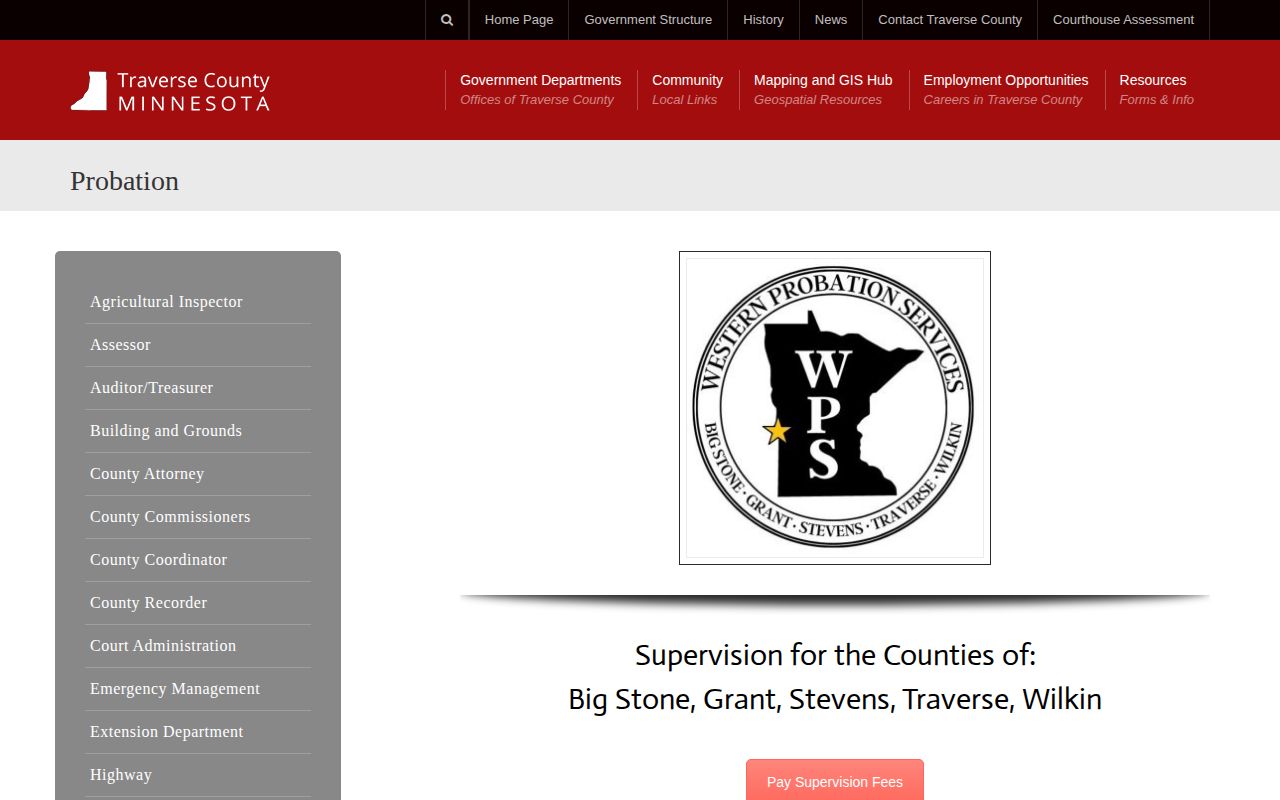
This county page is a contact source, not a public person-name supervision lookup.
Minnesota Statutes §13.84, subdivision 7 identifies public adult court-services data. Public fields can include the fact and location of supervision, the offense, start and end dates, duration, supervising agency or unit, conditions and compliance, plus revocation orders and reasons. Narrative progress reports and recommendations remain confidential.
A narrow request works best. Give the name, date of birth, Traverse court file number, and the date range. Ask for the fact and location of probation, supervision dates, assigned unit, public conditions, and any public revocation order. Request the statutory basis for each withheld item. This keeps the request focused on records the law classifies as public.
Juvenile supervision calls for added care. Western Probation’s stated role includes juvenile matters, but juvenile court and corrections data are not broadly public in the same way as adult court-services facts. Do not infer a youth’s status from an adult search or ask the office to disclose protected material. When the matched case is adult, state that fact in the request and cite the exact public fields needed.
Traverse DOC Supervision Status
For a Traverse case that led to state prison, use MNDOC rather than the county probation office. Minnesota’s ordinary modern executed felony sentence generally divides into a minimum two-thirds prison term and a maximum one-third supervised-release term under §244.101, subject to other statutes and disciplinary confinement. “Under Supervision” in the Public Viewer means the person has left prison but has not reached the end of DOC jurisdiction.
The detail record may show the MNDOC Offender ID, current status, sentence date, anticipated release date, expiration date, caseworker, supervision district, offense details, and court file numbers. An expiration date is the sentence endpoint. It is not necessarily the date the prison gate opened. A person may also leave the public viewer after final discharge, which makes the DOC records request and court file the historical fallback.
The Minnesota Haven program is the state-prison notification channel. It can cover conditional or final release, agent assignment, sentence expiration, supervision changes, and return to community supervision. County-jail VINE is a separate system and should not be used as the only source for an MNDOC sentence.
Read status dates in sequence. Anticipated Release Date is a projection, not proof that prison custody ended on that day. An “Under Supervision” entry is stronger evidence of physical prison release, yet it also shows that the sentence continues in the community. Expiration or final discharge marks a later point. If the viewer returns no result, check the identifiers and court file before concluding that supervision ended.
Minnesota Haven and the public viewer serve different purposes. Haven sends eligible notification updates. The viewer supplies a public status snapshot. DOC Records can supply a historical record when the public display no longer covers the person. Use the source that answers the exact question, and retain the date on which the status was observed.
Public registries do not fill the probation-search gap. The MNDOC Public Registrant Search covers only a subset of people who have a registration duty and are subject to public notification. The BCA search has a different focus on noncompliant registrants. Neither source lists all released people, all probation clients, or all people under DOC supervision. A missing result cannot establish discharge. Start with the sentence and the responsible supervision agency instead.
Traverse Warrants After Release
The Traverse County Sheriff warrant page and the MNDOC active fugitive list cover different groups. A county warrant can arise in a local case. The DOC list concerns people serving the community portion of a state sentence who are alleged to have violated terms and evaded authorities. Western Probation does not publish a public absconder list.
The state’s active fugitive lookup shows the separate MNDOC channel used for alleged absconders from state supervision.
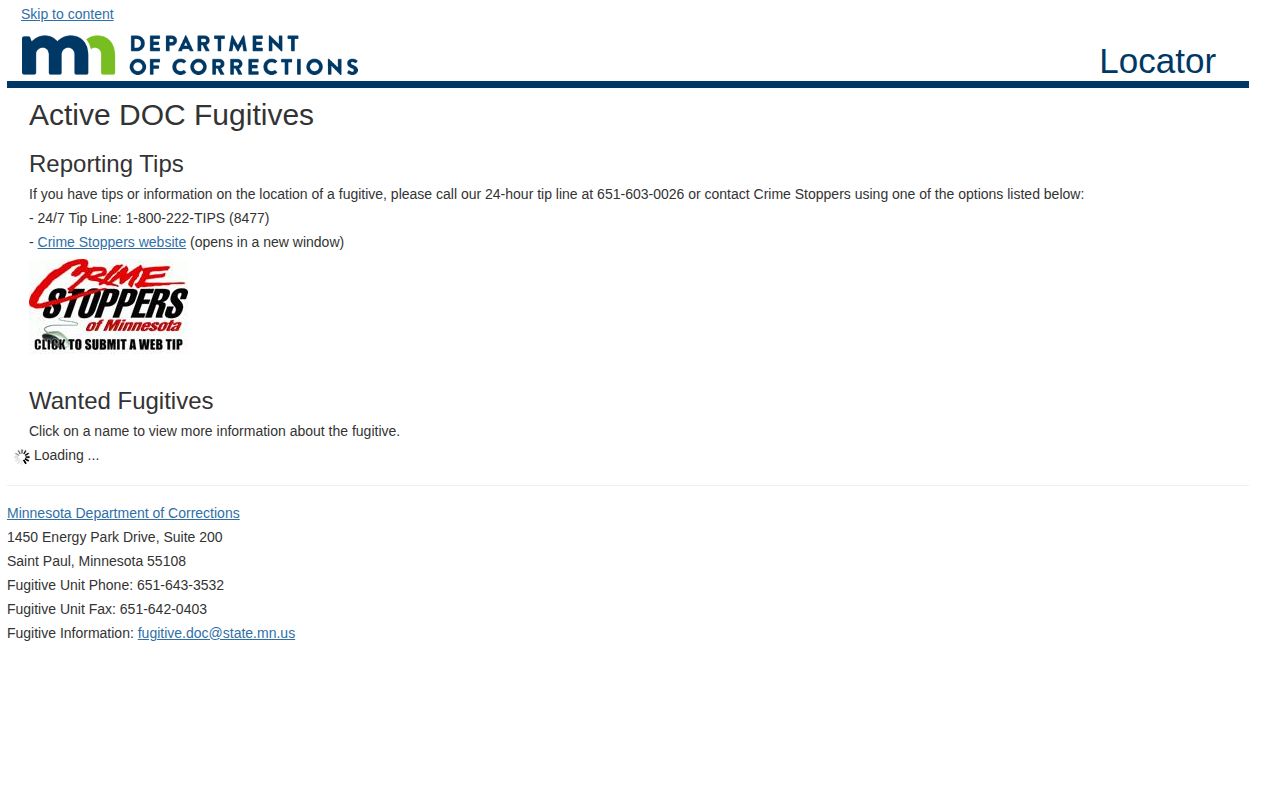
A result here concerns state supervision and must not be relabeled as a Western Probation or county-jail record.
A positive result is a legal-status clue. It does not prove the person has been arrested again or identify the present jail. Likewise, an absent result does not prove compliance or discharge. Check the issuing court, the responsible supervision office, and the current roster of any known holding agency. MNDOC lists a 24-hour fugitive tip line at 651-603-0026, but public record questions belong with the agency’s records channel.
Note: A warrant can change a person’s post-release status without rewriting the date or authority of the earlier release event.
Traverse Supervision and Discharge
Supervision conditions come from the sentence, release authority, and case plan. Public records may identify conditions and compliance at a high level. They may also show a revocation order, its reason, and the date and place of a status change. Other material, including protected corrections information, private treatment details, and confidential reports, can be withheld under §13.85 and related law.
The text of Minnesota’s corrections and detention data statute shows why a public status record can omit protected personal or operational details.
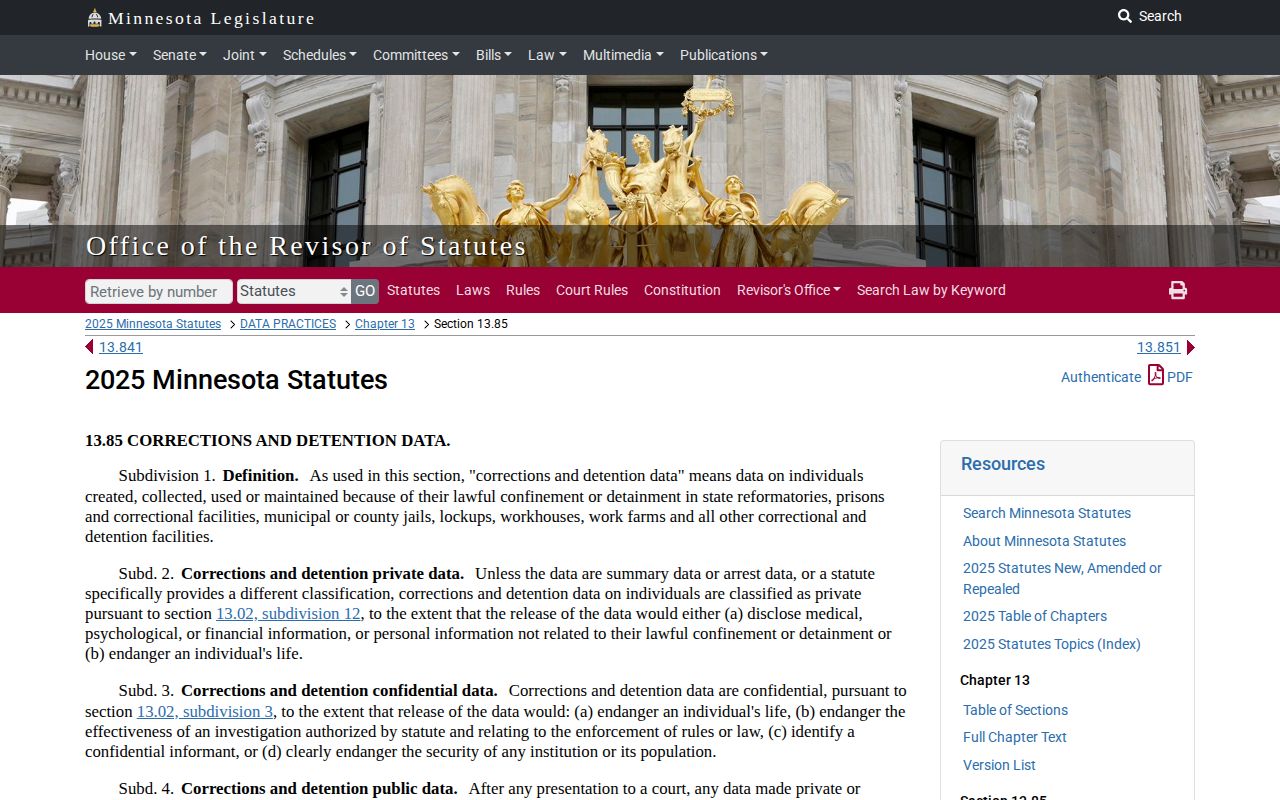
Any omission should be read as an access limit, not as proof that no supervision event occurred.
A violation allegation is not the same as a final revocation. A supervising officer may investigate, a court or correctional authority may hold a hearing, and a person may be detained while the issue is resolved. Read the final order or agency record. If custody follows, identify whether the person returned to Traverse County Jail, another county, or MNDOC.
Discharge ends the relevant supervision term. For local probation, look for a court discharge or completion entry and verify with Western Probation when needed. For state supervision, use the MNDOC expiration or final-discharge record. Minnesota Haven may send an eligible registrant a supervision-expiration notice, but the official agency record remains the best proof.
Conditions can change before discharge. A court may amend probation, or MNDOC may change the assigned agent or supervision district. That is why an old sentencing order should be paired with the newest public order or agency status. The start date, end date, and legal basis for a change are among the adult court-services fields that may be public under §13.84.
When documentation matters, ask for the event record rather than a verbal summary alone. A dated court order can show local probation discharge. A DOC offender record can show release to supervision, expiration, or final discharge. Keep any later revocation record separate. This produces a clear timeline and avoids turning one current status into a claim about every earlier stage of the sentence.
Records should be read by date. The original release, a later warrant, a revocation, a return to custody, and final discharge are separate events. Preserving that sequence avoids treating a single search result as the person’s full history.